Gadistha: A Romantic Handwritten Font for Crafters & Sellers
If you've ever spent hours tweaking letter spacing on a wedding invitation only to realize the script font lacks warmth—or struggled to find a handwritten typeface that cuts cleanly on your Cricut while still feeling luxe—then Gadistha is the quiet game-changer you’ve been waiting for. As a maker who designs printable wall art, hand-stamped labels, and boutique packaging for small-batch soap makers, I test dozens of script fonts each season. Gadistha stands out not because it shouts, but because it *listens*: to your design intent, your production tools, and your customers’ emotional response.
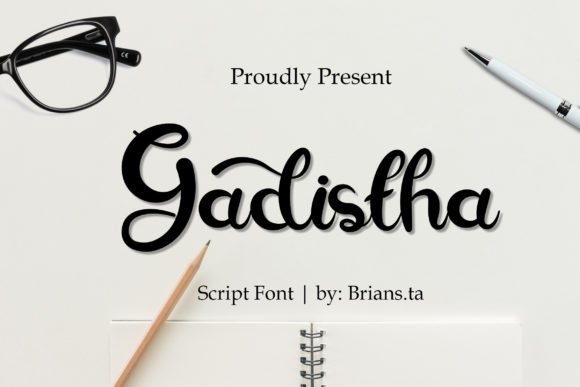
Gadistha is a romantic, minimalist handwritten font—sweet without saccharine, elegant without stiffness. Its strokes flow with gentle contrast and soft terminals, giving it that just-right balance of personality and polish. It’s not overly ornate (so no cutting headaches), nor is it so stripped-down that it loses charm. Think of it as the handwritten font you’d choose for a handwritten note from your favorite local florist: warm, intentional, quietly confident.
For physical product creators, Gadistha shines where legibility and emotional resonance intersect. On 1.5-inch kraft sticker labels for artisanal honey jars? It reads clearly at small sizes thanks to open counters and consistent x-height. On a 24"x36" farmhouse-style welcome sign for a barn wedding? Its natural rhythm and subtle swashes add movement without visual noise. And yes—it works beautifully in SVG layers for Silhouette Studio and Cricut Design Space, especially when you use the included alternate characters to avoid repeated letterforms in names or phrases like “Mr. & Mrs.”
I’ve used Gadistha across real projects: lavender-scented candle labels (paired with a light sans serif for ingredient lists), digital printable baby shower invitations (where its soft curves soften the layout without sacrificing clarity), and even embroidered tote bag mockups—because the font’s clean entry/exit points translate well into stitch paths. For seasonal craft sellers, it’s equally at home on Christmas gift tags (“Hand-Poured • Made With Love”) or spring farmers’ market signage (“Fresh Eggs • Every Saturday”).
Readability matters—not just for eyes, but for machines and materials. Gadistha holds up well at 10–12pt for printed thank-you cards, and at 18–24pt for vinyl-cut shop signs. Avoid using it below 8pt for physical labels unless you’re printing at high resolution and laminating—the delicate joins between letters need breathing room. For laser-cut wood signs or engraved acrylic tags, stick to uppercase words or short phrases (like “Brewed Here” or “Est. 2021”) where spacing stays generous and stroke weight remains consistent.
Font pairing is where Gadistha truly flexes its versatility. As a script font, it pairs best with a neutral, highly legible companion. Try it with a clean geometric sans serif (like Montserrat Light or Poppins Regular) for product packaging—Gadistha for the brand name, the sans for descriptors and fine print. For wedding stationery, pair it with a delicate serif (think Playfair Display Italic) for body text: Gadistha leads with romance; the serif grounds it in tradition. Avoid pairing it with other expressive scripts—two personalities in one layout compete instead of complement.
Gadistha lives in the Script Amp category, which means it’s built for display use—not long paragraphs. Use it for headlines, names, quotes, monograms, and decorative accents. Skip it for ingredient lists, care instructions, or multi-paragraph stories. That’s not a limitation—it’s thoughtful design discipline. Knowing when *not* to use a font saves time, avoids customer confusion, and keeps your brand voice sharp.
Inside the download, you’ll find OTF and TTF files—both fully compatible with Canva, Adobe Creative Cloud, Affinity apps, and cutting machine software. Look for stylistic alternates and discretionary ligatures: they’re subtle, but they make a difference when you’re designing 50+ wedding place cards and want variation without manual tweaks. While Gadistha doesn’t include extended Latin or Cyrillic support, it covers standard Western European languages thoroughly—perfect for Etsy shops serving US, UK, CA, AU, and EU markets.
One practical note every seller must consider: commercial licensing. Gadistha is a premium font licensed for commercial use—meaning you can use it in physical products you sell (mugs, shirts, stickers), digital downloads (planner pages, Canva templates), SVG bundles for crafters, client branding work, and social media graphics for your shop. Just be sure to check the license terms for limits on total sales volume or redistribution rights—most Script Amp fonts allow unlimited physical product use, but restrict bundling the font file itself in template kits. When in doubt, embed the text or convert to outlines before sharing editable files.
What makes Gadistha more than just another pretty script? It bridges intention and execution. It looks handmade, but performs like a pro-grade typeface. It adds perceived luxury to a $6 tea towel label without demanding $60 design fees. It helps your customer feel seen—not just by your product, but by the quiet care in how it’s named, wrapped, and presented. In a crowded handmade marketplace, that kind of consistency—between your values, your visuals, and your voice—is what builds recognition, repeat buyers, and word-of-mouth referrals.
Whether you're sketching a new logo on paper or prepping a batch of 200 holiday gift tags in Illustrator, Gadistha doesn’t ask you to choose between beauty and function. It simply gives you both—cleanly, calmly, and with just the right amount of sweetness.